


Listening at the Last Mile: Insights from Inclusion for All’s Grassroots Engagements in Katsina
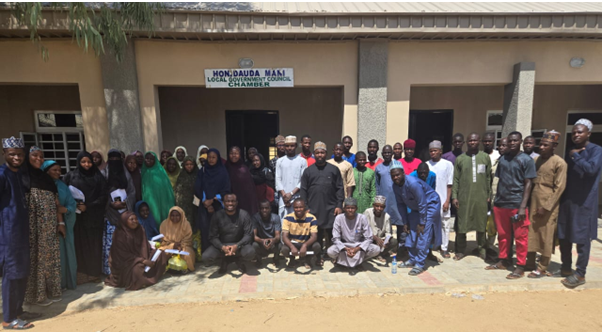
If financial services are increasingly available within communities, what explains the hesitation, caution, and uneven usage that many people still experience? This question framed discussions during the first round of the Inclusion for All Grassroots Engagements in Mani and Malumfashi Local Government Areas of Katsina State. Conversations within these communities revealed a layered story shaped by proximity, trust, usability, economic realities, and everyday service experiences. The engagements created space to move beyond access narratives and listen directly to how financial inclusion is understood and experienced at the community level.
In Nigeria, the financial inclusion landscape has transformed significantly. Account ownership has grown, agent services have expanded into remote areas, and digital financial services continue to reshape how individuals transact, save, and receive payments. Yet national progress often masks local variation. For many communities, inclusion is not simply about whether services exist but whether they are usable, trusted, affordable, and responsive within daily life. Recognising this dynamic, EFInA’s Inclusion for All Initiative launched the Grassroots Voices Network Project to strengthen community participation within the financial inclusion ecosystem. The inaugural engagement sessions in Katsina State marked the first step in establishing a structured platform through which grassroots perspectives can inform dialogue, evidence generation, and stakeholder action.
The State of Inclusion in Katsina

Discussions were grounded in the broader context of financial inclusion trends in Katsina State. The State Fact Sheet on Katsina indicates inclusion growth from 30% in 2020 to 37% in 2023; a gradual progress in access driven largely by alternative delivery channels beyond traditional banking infrastructure. Mobile connectivity and agent presence have contributed to this expansion, creating additional entry points into the formal financial system. However, engagements across Mani and Malumfashi highlighted that data alone does not fully capture lived experience. Their reflections illustrated how access indicators can coexist with persistent functional challenges, reinforcing the importance of complementing quantitative metrics with community insight.
A prominent theme across both LGAs relates to proximity to formal financial institutions. Participants described limited presence of bank branches within their communities, often requiring travel to neighbouring towns for in-person interactions. This distance influences convenience and shapes perceptions of service reliability even when digital and agent channels are available. At the same time, participants noted that account ownership has become more common through agent banking networks, mobile money operators, and fintech onboarding processes, revealing a nuanced reality in which access is expanding despite limited institutional visibility. Nevertheless, the symbolic value of a physical service touchpoint remains significant, particularly when considering complaint resolution or redress mechanisms.
Drivers of Usage and Behavioural Barriers

The engagements also highlighted a clear distinction between account ownership and active usage. Participants acknowledged that accounts may be opened for receiving transfers, accessing programmes, or meeting specific needs, yet this does not always translate into sustained engagement. Patterns of selective usage emerged, including cautious balances, limited transaction frequency, and continued reliance on cash for certain activities. Such behaviour reflects adaptation to perceived risks, uncertainties, and contextual constraints rather than resistance to financial innovation.
Economic realities consistently shaped these usage patterns. Participants spoke about income variability, competing household priorities, and affordability considerations that influence financial decisions. These realities affect transaction choices, storage behaviour, and willingness to engage with fee-based services. The discussions reinforced that financial behaviour often represents rational responses to resource constraints, highlighting the need for context-sensitive approaches that recognise financial decision-making as embedded within livelihood conditions.
Technology access and usability further influenced financial participation. While the state boasts of a high mobile phone ownership (at 91%), which was widely acknowledged by participants, they emphasised variations in device capabilities, connectivity stability, and digital familiarity. Basic feature phones remain common, shaping the types of services accessible, how individuals navigate digital interfaces, and contributing to the low digital transaction rate of 6%. Connectivity challenges can affect transaction reliability and confidence, while differences in digital literacy, often linked to age and exposure, influence comfort with digital platforms. These factors underscore that digital inclusion extends beyond device ownership to encompass practical usability and capability.
Trust emerged as a cross-cutting theme underpinning many aspects of community experience. Participants reflected on service interactions that shape perceptions of transparency, responsiveness, and reliability within the financial system. Experiences related to transaction issues, support navigation, and service clarity contribute to collective narratives that influence behaviour. The discussions highlighted the importance of visible consumer protection mechanisms, accessible support channels, and clear communication in strengthening confidence. Where individuals are uncertain about recourse options, caution may persist even when services are accessible, positioning trust as both a driver and outcome of inclusion.
Behavioural norms within local markets and social settings also shaped financial practices. Cash continues to play a prominent role in everyday transactions, supported by familiarity and widespread acceptance. Digital payments interact with these established norms in complex ways, influenced by merchant preferences, peer behaviour, and perceived convenience. These dynamics highlight that inclusion extends beyond individual capability to encompass broader ecosystem acceptance and behavioural patterns, pointing to the importance of multi-actor engagement involving merchants, service providers, and communities.
Community Champions as Connectors

A key milestone of the engagements was the activation of community champions drawn from participating associations and groups. These champions are expected to serve as connectors between communities and the financial inclusion ecosystem, facilitating information flow, supporting awareness efforts, and contributing to ongoing dialogue. The approach recognises the role of trusted community actors in shaping perceptions and sustaining engagement, positioning the network as both a feedback mechanism and a relational infrastructure for continued participation.
The Katsina engagements also demonstrate the value of integrating dialogue within evidence generation processes. While surveys and administrative data provide essential quantitative benchmarks, community conversations offer interpretive depth that illuminates the mechanisms behind observed trends. Participants’ reflections revealed how infrastructure, economics, trust, and behaviour intersect in shaping financial participation, enriching the evidence base for responsive policy and programme design. Through recurring engagements, the Grassroots Voices Network establishes an ongoing channel through which community perspectives can inform decision-making.
Looking Ahead

The sessions in Mani and Malumfashi represent the beginning of a multi-stage engagement process that will continue through subsequent monthly interactions. Planned activities include thematic discussions, stakeholder engagement, and continued data collection to track evolving experiences and priorities. This iterative approach recognises that inclusion is dynamic and benefits from sustained listening, learning, and adaptation over time.
Ultimately, the conversations in Katsina reaffirm that financial inclusion is lived rather than merely measured. Access pathways may expand, and indicators may improve, yet inclusion is defined by individuals’ confidence, experiences, and ability to use financial services in ways that support their livelihoods. By convening communities, activating champions, and fostering structured dialogue, the Inclusion for All Initiative contributes to an approach that centres listening alongside implementation.
As Nigeria advances its financial inclusion agenda, listening at the last mile remains essential. The voices from Mani and Malumfashi demonstrate that communities are not endpoints of inclusion efforts but active partners in shaping pathways toward more responsive, trusted, and inclusive financial systems.